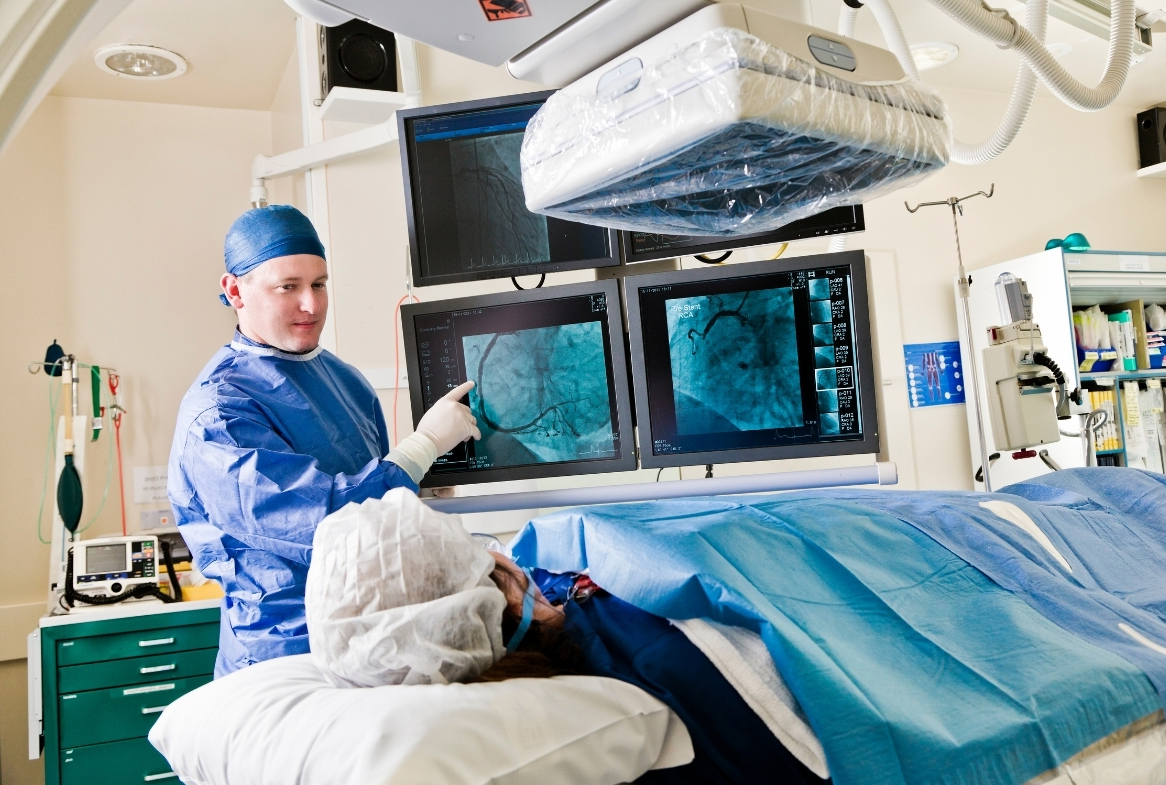
Doctor talking to a patient

Coming Spring 2027

The Invasive Cardiovascular Technology (ICVT) program will begin in Spring 2027 and is pursuing programmatic accreditation.

Train for a Career at the Heart of Healthcare

You will gain hands-on experience with advanced cardiovascular technology through a face-to-face format which includes classroom, laboratory, simulation, and clinical education experiences.


Graduates may pursue employment in:

  • Cardiac Catheterization Laboratories
  • Electrophysiology Laboratories
  • Structural Heart Programs
  • Peripheral Vascular Laboratories
  • Interventional Radiology
  • Hybrid Operating Rooms
  • Medical Device and Cardiovascular Industry Positions

Email Us to Learn More   Apply Today

Information Sessions

Information sessions give prospective students an overview of the Invasive Cardiovascular Technology program including the admissions process, curriculum and degree plan, clinical requirements, program expectations, and career outlook.

In-Person

Location: Collin College Frisco Campus (specific room details will be provided upon registration)
Time: 5-6 p.m.
Dates:
  • Tuesday, Aug. 11
  • Tuesday, Sept. 15
RSVP Required: Please email attendance to bsims2628@collin.edu

Virtual

Platform: Microsoft Teams (link provided upon RSVP)
Time: 4-5 p.m.
Dates:
  • Wednesday, Aug. 12
  • Wednesday, Sept. 16
RSVP Required: Please email attendance to bsims2628@collin.edu

Degree Overview

Collin College’s Associate of Applied Science in Invasive Cardiovascular Technology prepares students for a career as a cardiovascular technician. Enrollment in the program courses is limited to students who have been formally accepted into the program.


Curriculum sequencing and course offerings are subject to change. Clinical education typically occurs during daytime hours and may include early mornings, evenings, or occasional weekend experiences depending on clinical affiliate schedules.


Graduates are eligible to apply for the Registered Cardiovascular Invasive Specialist (RCIS) credential through Cardiovascular Credentialing International (CCI), provided all eligibility requirements are met.

Associate of Applied Science

Admission and Application Requirements

Admission to the Invasive Cardiovascular Technology (ICVT) program is competitive and selective. Meeting the minimum admission requirements does not guarantee admission to the program.


Applicants must:

  • Meet all Collin College admission requirements.
  • Be admitted to Collin College prior to submitting an ICVT program application.
  • Submit official transcripts from all colleges and universities previously attended.
  • Complete all required prerequisite coursework with a grade of "C" or better.
  • Earn a minimum prerequisite GPA of 2.5.
  • Complete the HESI A2 Admission Assessment Exam by the published application deadline.
  • Submit all required application materials by the published deadline.
  • Review the ICVT Program Technical Standards prior to applying.

Application Process

Applicants are strongly encouraged to attend an ICVT program information session prior to applying. Attendance is voluntary and does not influence admission decisions.


To apply for the program, you must: 

 
Step 1: Complete Prerequisite Coursework

The following prerequisite courses must be completed with a grade of "C" or better. Courses may be in progress at the time of application but must be completed by the end of the fall semester of the application year.

Course Title Credits
BIOL 2404* Human Anatomy and Physiology Basic 4
ENGL 1301 Composition I 3
HITT 1305 Medical Terminology I 3
HPRS 1201 Introduction to Health Professions 2
MATH 1314 College Algebra (see Mathematics options) 3
Total Credit Hours: 15
*May substitute BIOL 2404 with BIOL 2401 and BIOL 2402
Step 2: Complete the HESI A2 Examination

Applicants must complete the HESI A2 Admission Assessment Exam prior to the application deadline. Testing dates are limited; you are encouraged to schedule and complete the examination early.


Step 3: Submit Program Application

Submit a completed application and all required supporting documentation to the Invasive Cardiovascular Technology program director at bsims2628@collin.edu between Sept. 1 and Nov. 1 of each year.

Admission to the Invasive Cardiovascular Technology (ICVT) program is competitive. Applicants are ranked according to an admission point system and invited to participate in an interview process. Final admission decisions are based on a combination of application points and interview performance.


Attendance at an information session or meeting with the program director is encouraged but does not contribute points toward admission. The admission criteria are subject to revision. Any changes will be published on the program website and will apply to all applicants during the applicable admission cycle.


Applicants are selected for interviews based on their application point totals. Points are awarded in the following categories:

  1. Prerequisite Coursework
  2. HESI A2 Examination
  3. Prerequisite Grade Point Average (GPA)
  4. Bonus Points

Total Application Points Possible: 45


I.  Prerequisite Coursework (Maximum Points: 10)

Course Title Points
BIOL 2404 Human Anatomy and Physiology* 4
MATH 1314

College Algebra*

(see Mathematics options)

2
HITT 1305 Medical Terminology I* 2
HPRS 1201 Introduction to Health Professions* 2
Total Points: 10
*With a grade of "C" or higher

II. HESI A2 Examination (Maximum Points: 15)

The HESI Admissions Assessment A2 Examination includes seven areas: Anatomy and Physiology, Biology, Grammar, Math, Reading Comprehension, Vocabulary and General Knowledge, and Critical Thinking. The admissions scoring based on HESI results is as follows:

Section 90-100% 75-89% Below 75%
Anatomy and Physiology 2 points 1 point 0 points
Biology 2 points 1 point 0 points
Grammar 2 points  1 point 0 points
Math 2 points 1 point 0 points
Reading Comprehension 2 points 1 point 0 points
Vocabulary and General Knowledge 2 points 1 point 0 points
Critical Thinking 3 points 1 point 0 points

Only scores from the first HESI A2 attempt within a calendar year will be considered. HESI results from examinations completed outside of Collin College will be accepted; however, points cannot be awarded for sections not included in the examination.


Reapplicants are not required to retest. Previous HESI scores may be used for future application cycles. If a reapplicant elects to retest, the most recent scores will be used.


III. Prerequisite Grade Point Average (Maximum Points: 10)

Points are awarded based on the GPA calculated from completed prerequisite coursework only.

Grade Point Average (GPA) Points
3.76-4.00 10
3.66-3.75 9
3.51-3.65 8
3.36-3.50 7
3.25-3.35 6
3.00-3.24 5

A minimum prerequisite GPA of 2.5 is required for application eligibility. The highest grade earned within the first two attempts of each prerequisite course will be used in GPA calculations.


IV. Bonus Points (Maximum Points: 10)

You may earn up to 10 bonus points toward admission. Bonus points are awarded for academic achievement and relevant healthcare experience and are added to your overall admission score.

Criteria Points
Bachelor's degree or higher from a regionally accredited college or university 2
Prerequisite GPA of 3.75 or higher (GPA calculated from the required prerequisite coursework) 1
One year or more of paid direct patient care experience (e.g., certified nursing assistant, patient care technician, medical assistant, EMT, paramedic, licensed vocational nurse, registered nurse, respiratory therapist, surgical technologist, or similar role) 3
One year or more of cardiovascular-related healthcare experience (e.g., telemetry technician, monitor technician, EKG technician, cardiovascular technician, cath lab assistant, electrophysiology lab assistant, cardiac monitor technician, stress test technician, or similar role) 4
Documentation Requirements
  • Official transcripts must be submitted for all coursework and degree-related bonus points.
  • Healthcare employment experience must be verified through employer documentation indicating job title, dates of employment, and job responsibilities.
  • The ICVT Admissions Committee reserves the right to review and evaluate certifications, licensure, education, and work experience submitted by applicants and to determine eligibility for bonus points based on the intent of the established criteria.


Important Information

Bonus points are awarded in addition to the standard admission requirements and do not guarantee admission to the ICVT program. Applicants may earn points in multiple bonus categories; however, the maximum number of bonus points awarded is 10. Admission is competitive and based on the overall applicant pool.


V. Interview Process

A select number of applicants with the highest application point totals will be invited to interview following the application deadline.


The interview is designed to assess:

  • Communication skills
  • Professionalism
  • Knowledge of the profession
  • Critical thinking abilities
  • Interpersonal skills
  • Commitment to the field of invasive cardiovascular technology


Interview scores will be combined with application scores to determine final applicant rankings.


VI. Final Selection

Applicants with the highest combined application and interview scores will be offered admission to the Invasive Cardiovascular Technology program.


Selected applicants will receive written notification of acceptance via email and/or mail. Accepted students must confirm their intent to enroll by the stated deadline and complete all additional program requirements.


Accepted students must satisfy all clinical eligibility requirements outlined in the Admission Requirements section before beginning clinical education experiences.


Contact Program Director Bill Sims at bsims2628@collin.edu if you have any questions about the application process.

Additional Program Information

The Invasive Cardiovascular Technology (ICVT) program is a new program and is pursuing programmatic accreditation through the Commission on Accreditation of Allied Health Education Programs (CAAHEP) upon the recommendation of the Joint Review Committee on Education in Cardiovascular Technology. Program implementation and accreditation are subject to all required institutional and programmatic approvals.

Students accepted into the program must satisfy all clinical affiliate requirements before participating in clinical education experiences.


Requirements may include, but are not limited to:

  • Criminal background check
  • Drug screening
  • Current immunization records
  • Current American Heart Association Basic Life Support (BLS) certification for Healthcare Providers
  • Proof of health insurance
  • Additional requirements established by clinical affiliates


Proof of health insurance is required prior to the student's first clinical rotation, which begins during the second semester of the program.


Be aware that the Hepatitis B vaccination series consists of three doses and may take up to seven months to complete. Students who are unable to receive the Hepatitis B vaccine must notify the program director and may be required to complete a declination form, subject to clinical affiliate requirements.


All required immunizations and clinical compliance documentation must be completed prior to clinical placement.


Clinical placement opportunities, eligibility for professional credentialing examinations, and future employment opportunities may be affected by criminal background findings or failure to meet clinical affiliate requirements. Contact the program director and the appropriate credentialing agency regarding eligibility questions.


Social Security Number and External Agency Requirements

A Social Security Number (SSN) is not required for admission to Collin College. Be aware that external agencies — including clinical education affiliates, background check vendors, credentialing organizations, and state or national licensing or certification agencies — may require an SSN or other identifying information to complete required screenings, identity verification, credentialing, or certification processes.


Successful completion of all required clinical education experiences is a graduation requirement of the ICVT program. You are responsible for meeting all requirements established by assigned clinical affiliates and external agencies. Students who are unable to satisfy these requirements may be ineligible for clinical placement, which may delay progression in or prevent completion of the program.

A criminal background check is required for all accepted ICVT students before participation in clinical education. Students are responsible for any associated costs.


Clinical affiliates review background check results and may deny clinical placement based on their policies. Students who are unable to meet clinical placement requirements due to criminal history may be unable to complete the program. You must report any criminal incident to the program director within 72 hours.


Criminal history may also affect eligibility for professional credentialing examinations offered by Cardiovascular Credentialing International (CCI), including the Registered Cardiovascular Invasive Specialist (RCIS) credential.


Important: Admission to and completion of the program do not guarantee clinical placement, professional credentialing, certification, licensure, or employment. Eligibility is determined by clinical affiliates, credentialing organizations, licensing agencies, and employers according to their requirements.

Accepted ICVT students must comply with all drug testing requirements established by the program and its clinical affiliates. Drug testing may be required before the first clinical rotation, randomly during enrollment, for reasonable suspicion, or as otherwise required by a clinical affiliate. You are responsible for all associated costs.


Failure to complete required testing, refusal to submit to testing, or a positive drug test may result in denial or removal from clinical education and dismissal from the program. Clinical affiliates reserve the right to remove a student from clinical placement based on their policies.

The following represents the estimated costs associated with the Invasive Cardiovascular Technology (ICVT) program, including prerequisite courses. In addition to tuition, fees, textbooks, and school supplies, you should anticipate other program-related expenses, including uniforms, immunizations, health screenings, background checks, drug screenings, certification examinations, credentialing requirements, and clinical compliance costs. Visit the Tuition and Fees page for the most up-to- date information regarding tuition.


You are responsible for all program-related expenses. Some clinical affiliates may require additional background checks, drug screenings, or other requirements beyond those mandated by the college, and any associated costs are your responsibility.

Expense Category Estimated Cost
Tuition/Fees (60 program credits @ $67 per credit hour) $4,020
Textbooks and Digital Resources - Cougar Book Bundle $1,400
Background Check $40
Drug Screen $40
Liability Insurance ($11 per year) $11
Physical Examination Based on insurance coverage
Immunization/Titers Based on insurance coverage
Medical Health Insurance Based on insurance coverage
CPR Certification (BLS) $75
Clinical Compliance/Immunization Tracking System $30
RCIS Registry Review Materials $150
RCIS Examination Fee $365
Uniforms (2-3 sets) $250
Clinical Shoes $200
Transportation/Parking for Clinical Rotations $1,500

Note: All costs listed are estimates only, are subject to change without notice, and may not include all required expenses. Additional fees may be assessed as necessary and as approved by the Board of Trustees of Collin College. Tuition and fees are based on the number of credit hours enrolled and the student's residency classification. Current tuition and fee information is available on the Tuition and Fees webpage.

Accepted students must meet all immunization and health requirements established by Collin College, the Texas Administrative Code (TAC), affiliated clinical agencies, and other applicable regulatory standards.


Required documentation includes:

  • Measles, Mumps, and Rubella (MMR) immunity
  • Varicella (Chickenpox) immunity
  • Tetanus, Diphtheria, and Pertussis (Tdap)
  • Annual Influenza vaccination
  • Hepatitis B immunity or vaccination series
  • Tuberculosis (TB) screening
  • Any additional health or immunization requirements established by clinical affiliates


You are responsible for all costs associated with immunizations, health screenings, and clinical compliance requirements. Failure to meet or maintain these requirements may prevent participation in clinical education and affect progression in the program.

You are required to maintain personal health insurance throughout enrollment in the ICVT program. Proof of current health insurance must be provided before the first clinical rotation and maintained throughout the program. Students who fail to maintain required health insurance will not be permitted to participate in clinical education.


Collin College does not provide student health insurance and is not responsible for healthcare services or expenses incurred during program or clinical activities. You are responsible for obtaining and maintaining your own health insurance coverage and for all related healthcare expenses.

As a newly established program, outcomes data are not yet available. Program outcomes, including credentialing examination pass rates, job placement rates, and program completion rates, will be published on the program website as data becomes available in accordance with Commission on Accreditation of Allied Health Education Programs (CAAHEP) standards.


Students enrolled in the Invasive Cardiovascular Technology (ICVT) program must be able to meet the following technical standards, with or without reasonable accommodations, to successfully complete program requirements and perform the essential functions of an invasive cardiovascular technologist in classroom, laboratory, and clinical settings.

Category
Physical Requirements
Stand and walk for prolonged periods during clinical procedures and patient care activities
Lift, transfer, move, and position patients and/or equipment weighing up to 50 pounds
Perform cardiopulmonary resuscitation (CPR) and other emergency response procedures
Manipulate catheters, guidewires, imaging equipment, and other procedural instruments with precision
Demonstrate fine motor skills, manual dexterity, and hand-eye coordination necessary for invasive cardiovascular procedures
Reach, bend, stoop, and move safely in confined procedural environments
Wear lead protective equipment for extended periods during clinical procedures
Maintain physical stamina necessary to participate in lengthy procedures that may extend several hours
Sensory Requirements
Observe patient conditions and recognize changes in physical, emotional, and physiological status
Distinguish audible alarms, patient responses, and other critical sounds in the clinical environment
Read and interpret patient monitors, imaging displays, procedural equipment screens, and hemodynamic data
Differentiate colors, visual indicators, and waveform patterns used in patient monitoring and diagnostic equipment
Assess patient responses through visual, auditory, and tactile observation
Communication Requirements
Communicate effectively, accurately, and professionally with patients, families, faculty, clinical instructors, physicians, and healthcare team members
Accurately document patient information, procedural data, and clinical activities in written and electronic formats
Follow verbal, written, and electronic instructions
Provide and receive information effectively in routine, urgent, and emergency situations
Behavioral Requirements
Demonstrate emotional stability and professionalism when providing patient care and participating in invasive procedures
Exercise sound judgment and maintain patient safety in all settings
Maintain integrity, ethical behavior, confidentiality, and accountability for actions
Function effectively and safely under stressful, fast-paced, and potentially emergent conditions
Adapt to changing environments, patient conditions, and clinical situations
Demonstrate professional behavior and respect for the dignity, rights, and individuality of all patients, faculty, staff, and healthcare team members

Note: You must be able to meet these technical standards with or without reasonable accommodations. Requests for accommodations should be directed to the college’s Disability Services Office in accordance with college policy and applicable federal and state laws.

For program information, please contact:

Bill Sims, RCIS, MBA

Director of Invasive Cardiovascular Technology program
bsims2628@collin.edu

Visit the academic advising page to learn more about degree planning and credit transfers. Visit the admissions page and the financial aid page to learn how to get started at Collin College.