
Clear The Roads: Technology Is Changing Transportation And The Automotive Workforce
October 06, 2023
Cougar News
Back to Newsroom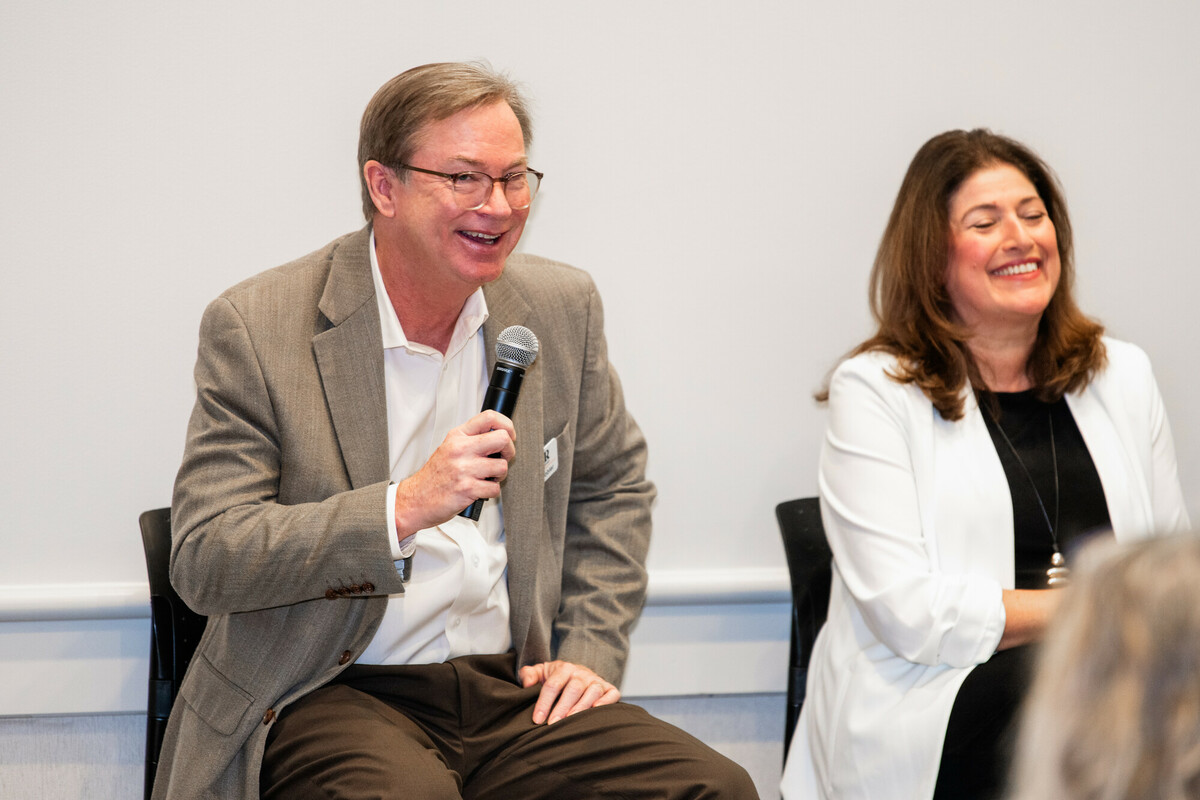
Cutting-edge, innovative, autonomous, electrical, and infrastructure were a few of the terms used during a panel discussion titled “How Technology is Changing Transportation.” The dialogue spanned from the current and future impact of technology to infrastructure needs
The three-person panel discussion was moderated by Drew Campbell, executive director of Dallas Regional Mobility Coalition. Campbell began the discussion with Ian Kenny, director of logistics and innovation at Hillwood, a Perot Company, who explained his company’s approach to the changes in transportation as a real estate development company that focuses on industrial and logistics in the movement of freight.“When we look at the future, we have an obligation to really think about infrastructure for the next 30 years plus. We are not your typical development company. We build, own, and plan to have this as a generational asset, so we have to think long term,” Kenny said. “A lot of that involves how infrastructure has to change overtime to support our customers transportation needs.”
Harry Hartfield, senior manager of public affairs for Uber, a ride-hailing service company that also caters to customers’ transportation needs, shared how they have partnered with Dallas Area Rapid Transit (DART) to expand options for customers.
“They (DART) came to us and said, ‘We need someone to get people from their home to the trainline. Can we do that with you?’” Hartfield said. “And so, we have this program here that operates in McKinney. It operates in Plano. It costs the same as the DART, so it’s all one system integrated highly through the DART app. And it will take you to the train for three dollars – now, that is the cost of the DART ride – and it will take you all the way downtown. I think that’s a really good example of what the immediate future looks like for transportation.”
The third panelist, Natalie Flores, services operations manager at Rivian, an electric vehicle manufacturer, joined the conversation to share the infrastructure needs to service electrical vehicles.
“I have an automotive background as far as the mechanic aspect. When I went to school, I worked on some vehicles … but then I was able to go through a manufactured-based program and learn the EV spectrum, and it is almost like night and day,” said Flores. “I mean we do have some similarities, but it is more IT-based. So, if I were to tell you a daily scope of work of my technicians, they pull data; they have to pull logs; they do scriptwriting for modules. A lot of this is all computer based. We really want to focus on developing that technician and that workforce, because it is a huge need.”
All three panelists agreed that a major shift is happening with technology in transportation and that Texas has a regulatory environment that is receptive of the innovation.
To view the video of this panel session, click here. For more information about the 2023 Collin Leadership Policy Summit, visit www.collin.edu/policysummit/.
Back to Newsroom