
This program has closed. Students that declared the program prior to August 17, 2026
must complete the program by August 31, 2029 to be granted the degree or any associated
certificates.
Continuing Education Courses
Polysomnographic Technology continuing education courses are available.
Become a Sleep Technologist
Embark on a rewarding career as a sleep technologist and become an integral part of the evolving landscape of healthcare and wellness. As a sleep technologist, you'll play a crucial role in enhancing individuals' lives by helping them achieve better sleep and overall well-being. With the increasing awareness of the importance of quality sleep, the demand for skilled professionals in sleep technology is on the rise. By joining this field, you'll have the opportunity to leverage cutting-edge technologies, work on innovative solutions, and make a meaningful impact on people's lives. Dive into a dynamic and fulfilling career where you can contribute to the growing understanding of sleep and its profound impact on health – become a sleep technologist and be at the forefront of this transformative industry.
Program Information
Good sleep is a struggle for many people
Did you know that there are at least 100 different sleep disorders that have been identified? An estimated 60 million Americans suffer from at least one sleep disorder. Sleep medicine only has around 16,000 registered polysomnographic (sleep) technologists worldwide amidst a global shortage in the profession. That means that worldwide there's only one sleep technologist globally for every 3,750 people with a sleep disorder in the United States. As more and more health problems get linked to poor sleep, the need for sleep techs will continue to grow.
What do sleep techs do?
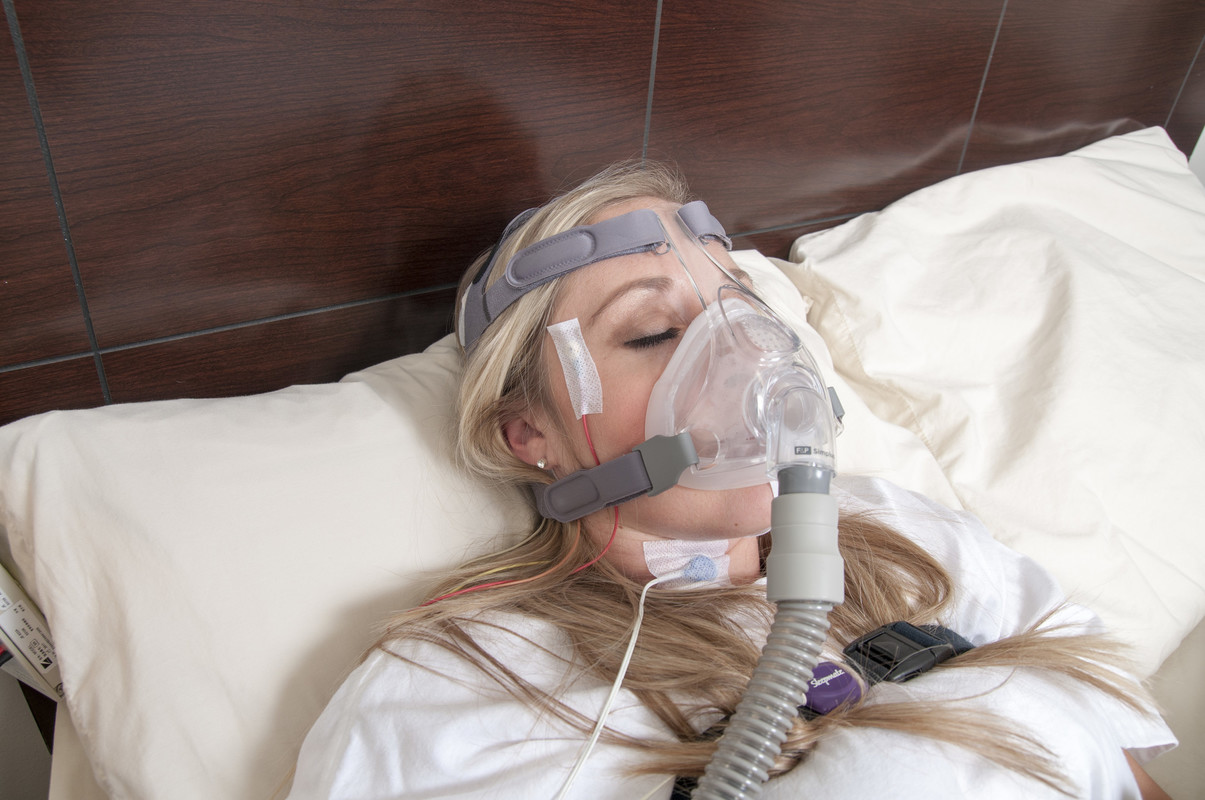
Polysomnographic technologists conduct the sleep studies that allow physicians to diagnose and treat patients suffering from sleep disorders. Through this program, Collin College students are prepared to enter the growing and challenging field of sleep medicine in Texas by being equipped with the skills and fundamental knowledge to effectively monitor, manage, and treat sleep disorders under medical supervision.
The field of polysomnography is a rapidly expanding area of healthcare. According to salary data from Salary.com, the median annual salary for a polysomnographic technologist in the Dallas metro area is $65,000 (September 2025).
For those already working in sleep technology
For those already in the field, we have a prior learning assessment (PLA) option that can help you achieve the Associate of Applied Science degree in Polysomnographic Technology. In addition, we offer continuing education courses to help boost your sleep medicine knowledge and provide continuing sleep technology education (CSTE) credits for your RPSGT and CCSH credential recertifications.
For the latest happenings with the program, please visit our Program News page.

The Collin College Polysomnographic Technology Program is accredited by the Commission on Accreditation of Allied Health Education Programs (CAAHEP) upon the recommendation of the Committee on Accreditation for Polysomnographic Technologist Education (CoA PSG).
Commission on Accreditation of Allied Health Education Programs
9355 - 113th St. N, #7709
Seminole, FL 33775
Phone: 727-210-2350
www.caahep.org
Accreditation Status
Collin County Community College District is accredited by the Southern Association of Colleges and Schools Commission on Colleges to award baccalaureate degrees, associate degrees and certificates. Contact the Commission on Colleges at 1866 Southern Lane, Decatur, Georgia 30033-4097 or call 404-679-4500 for questions about the accreditation of Collin County Community College District.
Accrediting Bodies
Accreditation Commission on Programs in Hospitality Administration, American Culinary Federation Education Foundation, American Dental Association's Commission on Dental Accreditation, Commission on Accreditation of Allied Health Education Programs, (through the Accreditation Review Committee on Surgical Technology and Surgical Assisting [ARCTSA]), Commission of Accreditation of Allied Health Education Programs (through the Committee on Accreditation of Emergency Medical Service Professions [CoAEMSP]), Commission on Accreditation for Health Informatics and Information Management Education, Commission on Accreditation for Respiratory Care, National Association for the Education of Young Children, Committee on Accreditation for Respiratory Care, Accreditation Commission for Education in Nursing.
2025-2026 Advisory Committee
Josh Isaacs, RPSGT - Chairperson 2023-2025
Employer Member
Director of Operations
Medical Sleep Solutions
Desoto, TX
Kate Thompson, AAS, RPSGT, CCSH - Vice Chairperson 2023-2025
Alumni Member
Polysomnographic Technologist
Wylie, TX
Alumni Member
Polysomnographic Technologist
Wylie, TX
Mir Ali, MD, RPSGT
Employer Member
Senior Clinical Coordinator
Veristat LLC
Plano, TX
Jason Beard, RPSGT
Employer Member
Sleep Lab Supervisor
Texoma Medical Center Bonham Hospital
Bonham, TX
Lisa Boncan, AAS, RPSGT, CCSH
Alumni Member
Polysomnographic Technologist
Plano, TX
Christopher Hamm, Esq.
Public Member
Attorney
Bedford, TX
Dr. Michael Ibarra
Physician Member
UT Southwestern University Medical Center
Dallas, TX
Courtney Johnson, AAS, RPSGT
Employer Member
Neurodiagnostic Technologist
Parkland Hospital
Dallas, TX
Malaina Joshua, AAS, RPSGT
Employer Member
Neurodiagnostic Technologist
Parkland Hospital
Dallas, TX
Desiree Peterson, MSN, RN, CPNP-AC, RPSGT, CCSH
Employer Member
Registered Nurse - Emergency Department
Children's Health
Plano, TX
Cortney Pulliam, AAS, RPSGT, CCSH
Employer Member
Scoring Technologist/Student Coordinator
Pediatric Sleep Institute
Plano, TX
Diane Woods, RPSGT
Employer Member
Assistant Manager, Sleep and Breathing Disorders Clinic
UT Southwestern University Medical Center
Dallas, TX
The exact time schedule for the Polysomnographic Technology program differs each semester.
Fall Semester First Year
AAS students: Tuesday from either 10:30 am to 2:00 pm or 1:00-4:00 pm.
Certificate students: Lecture is online. Lab is Tuesday or Thursday from 4:30-10:30 pm. Clinical is one night per week for 12 hours overnight.
Spring Semester First Year
AAS students: Lecture is Monday from 1:30-3:10 pm and Wednesday from 11:00 am to 3:10 pm. Lab is either Monday or Tuesday night from 4:30-10:30 pm.
Certificate students: Lecture is online. Lab is Wednesday or Thursday from 4:30-10:30 pm. Clinical is one night per week for 12 hours overnight.
Summer
AAS students: Three nights of clinicals (10-12 hours overnight)
Certificate students: Monday from 11:00 am to 5:30 pm
Fall Semester Second Year
AAS students: Lecture is Monday from 11:30 am to 3:30 pm and Wednesday from 12:30 to 3:30 pm. Lab is Monday or Wednesday from 4:30-10:30 pm. Clinicals are 18 hours per week on non-lecture/lab days.
Spring Semester Second Year
AAS students: Monday from 10:30 am to 4:30 pm. Clinicals are 18 hours per week on non-lecture/lab days.
These times are tentative and subject to change. Times for clinical rotations may differ depending on the hospital/sleep center where it is scheduled. Students should check the semester schedule online for current times and days.
- 4 Better Sleep - Dallas, TX
- Carrus Specialty Hospital - Sherman, TX
- Children's Health Sleep Disorders Center - Dallas and Plano, TX
- Baylor, Scott, and White Lake Pointe Sleep Center - Rowlett, TX
- Parkland Hospital Sleep Center - Dallas, TX
- Pediatric Sleep Institute - Plano, TX
- Sleep Trends & Diagnostic Centers - Mesquite, TX
- Texoma Medical Center - Denison, TX
- UT Southwestern Sleep and Breathing Disorders Clinic - Dallas, TX
The following are approximate costs to be anticipated for the Polysomnographic Technology Program.
Tuition: See the Tuition and Fees page for the current rate per credit hour. Tuition for the AAS track is based on residency and 60 total credit hours. Tuition for the Certificate track is based on residency and 28 total credit hours.
Books: Approximately $1000 total
Uniforms: Approximately $150 for three sets of program scrubs
Medical Insurance: Required during all clinical training. Please obtain a quote on your own.
Clinical Supplies: $48
Immunization Tracker: $30
Drug Screening: $30
Background Check: Individually based (approximately $45-$75)
Associate of Applied Science in Polysomnographic Technology
Cost
How much will this program cost me?*
- Tuition and fees: $4,020 (in-county)
- Books and supplies: $1150
- On-campus room & board: $5796
* The amounts shown above include costs for the entire program, assuming normal time
to completion. Tuition is based on in-county rates. Note that this information is
subject to change. For tuition rates for out-of-county and out-of-state residents,
visit the Tuition and Fees web page.
Financing
What financing options are available to help me pay for this program?
Financing for this program may be available through grants, scholarships, loans (federal
and private) and institutional financing plans.
Success
How long will it take me to complete this program?
The program is designed to take 22 months to complete. Of those that completed the
program in 2024-2025, 100% finished in 22 months.
What are my chances of getting a job when I graduate?
The positive placement rate for students who completed this program in 2024-2025 is
71.43% out of graduates who have reported.
Certificate in Polysomnographic Technology
Cost
How much will this program cost me?*
- Tuition and fees: $1,876 (in-county)
- Books and supplies: $1150
- On-campus room & board: $5796
* The amounts shown above include costs for the entire program, assuming normal time to completion. Tuition is based on in-county rates. Note that this information is subject to change. For tuition rates for out-of-county and out-of-state residents, visit the Tuition and Fees page.
Financing
What financing options are available to help me pay for this program?
Financing for this program may be available through grants, scholarships, loans (federal
and private) and institutional financing plans.
Success
How long will it take me to complete this program?
The program is designed to take 12 months to complete. There was not a Certificate
track cohort for 2024-2025.
What are my chances of getting a job when I graduate?
There was not a Certificate track cohort for 2024-2025.1
Name of the accrediting agency this placement rate is calculated for:
CAAHEP
Who is included in the calculation of this rate?
All students who completed between July 1, 2024 and August 31, 2025 are included in
this calculation.
What types of jobs were these students placed in?
The job placement rate includes completers hired for: Jobs within the field or continuing
education
Positions that recent completers were hired for include: Polysomnographic Technologist
When were the former students employed?
This rate is based on program completers who were employed within 1 year of graduation.
How were completers tracked?
Graduate correspondence. Not all graduates responded to program correspondence so
exact numbers cannot be determined at this time.
1Job Placement Rate Information
 Medical Director
Dr. Vikas Jain, MD, FAASM
Student success is one of the primary objectives of the Polysomnographic Technology program at Collin College. Positive placement and Registered Polysomnographic Technologist (RPSGT) exam pass rate are two of the ways we measure student success. Positive placement means that the graduate is employed full or part-time in the field of polysomnography; and/or continuing his/her education; and/or serving in the military.
Positive placement for the last four years:*
| Graduation Year | Positive Placement Rate | Number Positively Placed | Number of Graduates | Track |
|---|---|---|---|---|
| 2022 | 75% | 6 | 8 | AAS |
| 2023 | 71% | 5 | 7 | AAS |
| 2024 | 64% | 9 | 14 | AAS |
| 2025 | 83% | 5 | 6 | AAS |
Overall RPSGT exam pass rates for the last four years:
| Graduation Year | Overall Pass Rate | Number Passed | Number Attempted | Track |
|---|---|---|---|---|
| 2022 | 100% | 6 | 6 | AAS |
| 2023 | 67% | 4 | 6 | AAS |
| 2024 | 67% | 6 | 9 | AAS |
| 2025 | 83% | 5 | 6 | AAS |
*Note: Positive placement results are for graduates reporting; but not all graduates responded to program correspondence, so exact placement numbers are undetermined.
** Positive placement and pass rates updated 10/29/25.
Continuing Education Information
Collin College offers Polysomnographic Technology continuing education (CE) courses. Visit the CE Polysomnographic Technology Continuing Education page for more information.
The BRPT RPSGT STAR Self-Study Program (SS014) through Collin College Continuing Education is designed to assist those sleep centers/labs outside of the Collin College service area with didactic training for new sleep technologists. The program consists of seven courses of instruction that are offered fully online. Visit the BRPT RPSGT STAR Self-Study Program web page for more information.
The Certification in Clinical Sleep Health (CCSH) Exam Preparation course (PSGT 2074) reviews the fundamentals of polysomnography while introducing the healthcare professional to the role of the clinical sleep health professional. The course consists of 14 modules of instruction and concludes with a 100-question final exam formatted similarly to the CCSH exam. Visit the CCSH Exam Preparation BRPT-Approved STAR Program web page for more information.
Contact Us
Dean of Health Sciences and Emergency Services
Division Administrative Assistant
Executive Director of Continuing Education Health and Wellness